



Let’s Talk Tents
A tented event offers something a traditional venue never can: a space that feels completely your own. Whether you’re planning a wedding, a backyard celebration, or a large-scale festival, a tent gives you a blank canvas to work from. Draping, flooring, lighting, lounge areas—every detail can be tailored to your vision.
But not all tents are created equal. The right choice depends on your surface, your site, your guest count, and the look you’re after. Below is a breakdown of the three main tent types we offer, how they differ, and how to know which one fits your event. When you’re ready, our Tent Specialists can walk your space and handle the logistics and customizations with you.
Frame Tents
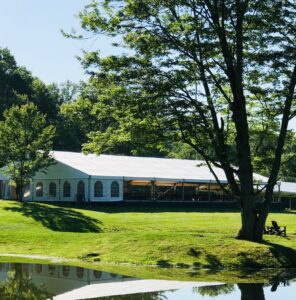
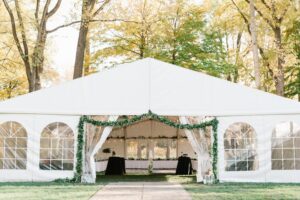
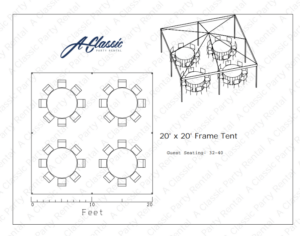
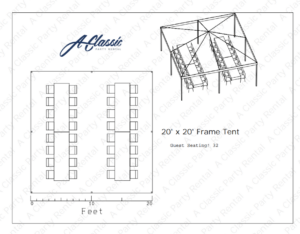
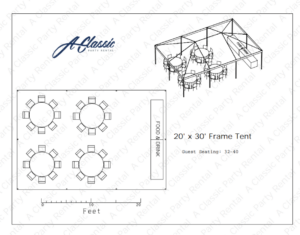
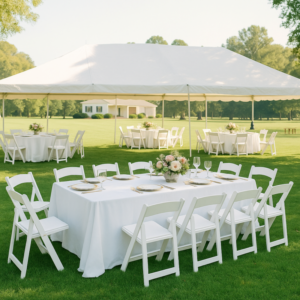
Frame tents are one of the most versatile and widely used options. They’re supported by an internal framework of aluminum or steel, which means no center poles and a completely open interior.
Because they don’t rely on stakes for structure, frame tents can be installed almost anywhere—including concrete, asphalt, and tighter spaces near buildings. When staking isn’t possible, they can be secured with weighted ballasts.
Best for:
- Events in confined spaces or near structures
- Installations on hard surfaces like concrete or asphalt
- Ceremonies and layouts that require unobstructed views
Key advantages:
- Open floor plan with no center poles
- Flexible layout and design options
- Can be installed where staking isn’t possible
- Dual weighting-and-staking combinations for added stability
A note on weighting: Weighting is a great alternative when staking isn’t an option—for example, to protect asphalt. Just know it can add to your cost and requires additional planning, so it’s worth discussing early.
Pole and Century Tents
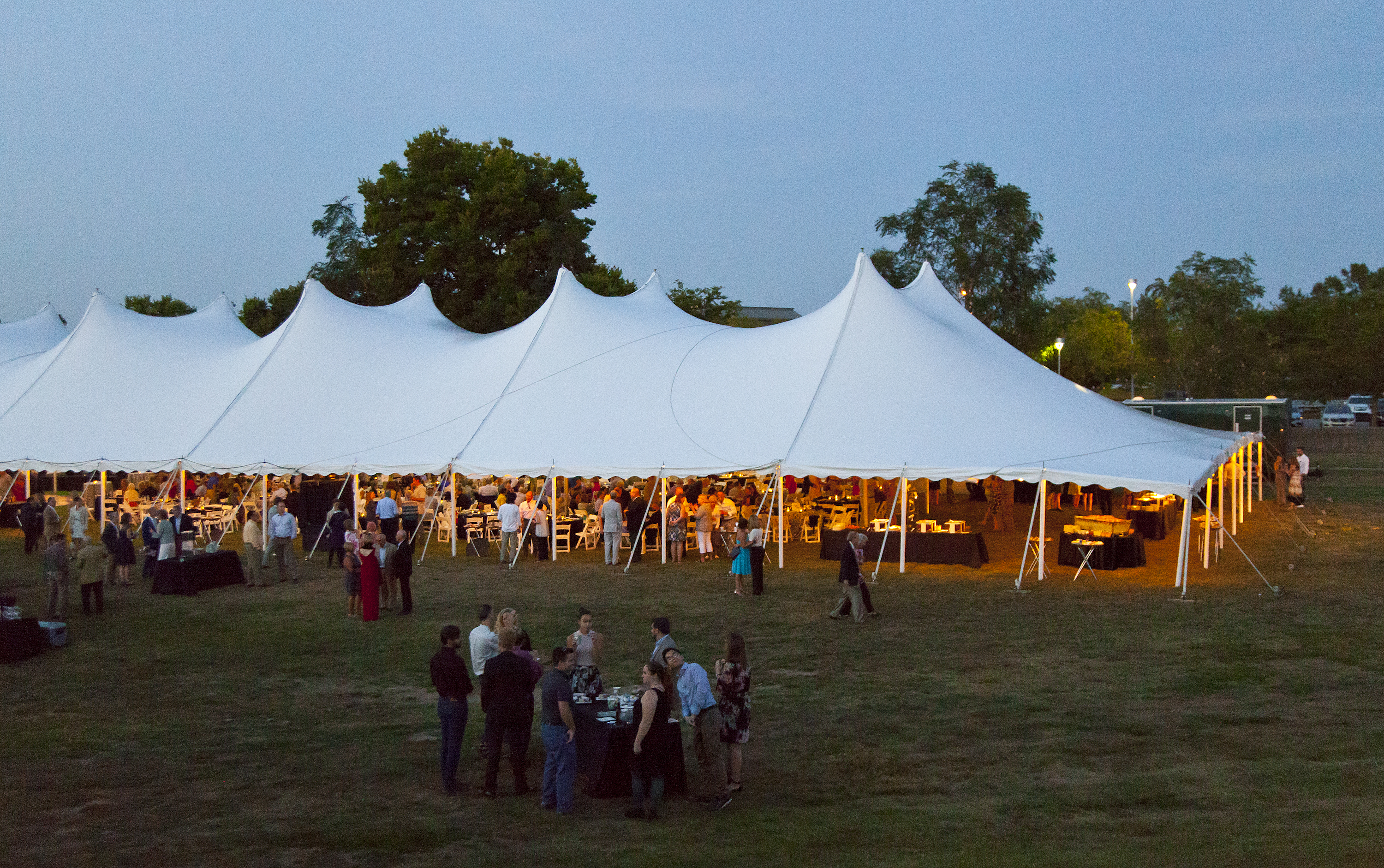
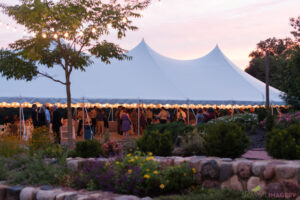
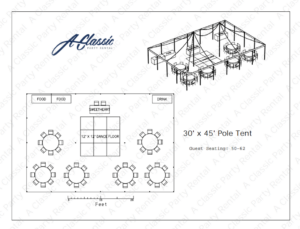
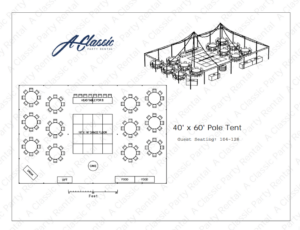
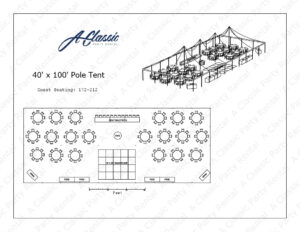
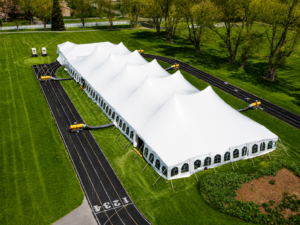
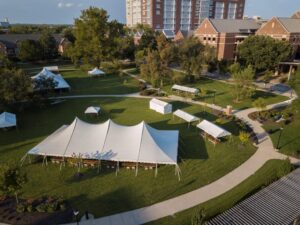
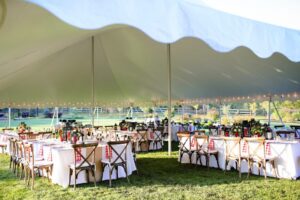
Pole tents—also known as Century tents—are a popular choice for larger events, known for their high peaks and elegant silhouette. They’re supported by stakes around the perimeter and center poles inside the structure. The tension created by the stakes gives the tent its signature sweeping shape.
- 40-foot-wide pole tents typically have a single row of center poles
- 60-foot-wide pole tents feature double rows of center poles
Because they must be staked into the ground, pole tents are best suited for grass or areas where staking is permitted. They cannot be installed using weights. Many hosts embrace the center poles as a design feature—wrapping them in fabric, greenery, or lighting to lean into that romantic, billowing look.
Best for:
- Large weddings and events
- Open outdoor spaces such as lawns and fields
- Clients prioritizing aesthetics and cost efficiency
Key advantages:
- More economical than other tent types
- Visually striking with high peaks
- Available in larger sizes for higher guest counts
Clear Span Tents
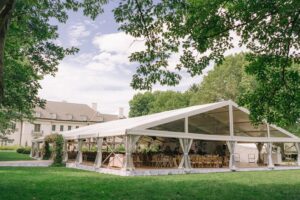
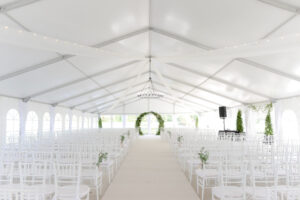
Clear Span tents are the most durable and structurally robust option, designed to handle long-term installations and more extreme weather. Built with a rigid frame and no interior poles, they deliver a completely open interior with a more permanent, venue-like feel. They’re the right call when you need a weather-tight solution that can accommodate complex event builds.
Best for:
- Long-term or multi-day events
- Events requiring advanced lighting, AV, or rigging
- Situations where weather protection is critical
Key advantages:
- Engineered to withstand wind and rain
- No interior obstructions
- Supports intricate lighting and production setups
- Highly customizable interior options
Quick Comparison: Which Tent Fits Your Event?
Here’s the short version to point you in the right direction:
- Tight space or a hard surface? A frame tent installs almost anywhere and keeps the interior open.
- Grassy space and a classic, elegant look? A pole or Century tent brings the drama—often at a friendlier price.
- Multi-day, upscale, or weather-sensitive? A ClearSpan tent is engineered for it.
Still not sure? That’s exactly what our Tent Specialists are for.
Additional Considerations
Before you finalize your tent, keep these factors in mind:
- Permits and regulations: Some municipalities require permits for larger tent installations.
- Surface type: Grass, concrete, or asphalt will affect both tent selection and installation.
- Weather planning: Sidewalls, heaters, fans, or flooring may be needed depending on the season.
- Lighting and power: Tents often require additional power sources.
- Timeline: Installation and breakdown may take multiple days depending on the structure.
When to Book Your Tent
Tents are in high demand, especially during spring, summer, and fall—and they’re one of our most-requested rentals. Many dates book months in advance, so we recommend reaching out as early as possible to secure your structure and date- 6 months to a year in some cases is ideal.
Let’s Bring Your Event to Life
Choosing the right tent is the foundation of a successful outdoor event. Our experienced team is here to guide you through every step—from selecting the right structure to designing a fully customized environment.
Contact us today to connect with one of our Tent Specialists and receive a personalized quote. We’re here to help.